Architects for Peace news and articles

2.7.19

2019 Volunteer Project – Bridging Lanka

Image source: Bridging Lanka

2019 Volunteer Project – Urban Improvement in Mannar


To Architects for Peace Community Members:
This year, as part of our commitment to support pro bono work, we are supporting the development work undertaken by Bridging Lanka. In the past we have had some volunteers working with the Bridging Lanka NGO and we have also attended a information meetings in February this year.
For more information, please check the website and/or contact Steve Dunn (details in the webpage)

Who is Bridging Lanka?
Bridging Lanka is a not-for-profit community development organisation operating in the northern Sri Lankan district of Mannar where it has its office and ‘in-country’ team. Bridging Lanka harnesses the resources of international volunteers and expatriate Sri Lankans to benefit the people of Mannar, Puttalam and Kandy Districts.

Bridging Lanka supports a range of projects responding to social, economic and environmental issues in these communities. More information about Bridging Lanka, its objectives, programs and projects can be found at the Bridging Lanka website.

30.5.12

Regeneration: improving the quality of life of the marginalised


We ended 2011 debating the role of corporations towards social interventions – I along with my partner in crime Kamil went down to Footscray for the Footscray Community Luncheon to see firsthand exactly what these big corporations were giving back to society. It surprised me when the large corporations I was expecting didn’t materialise – but instead a whole host of local institutions and businesses were lending their hand for such a note worthy course.  
A wide ranging group of businesses and institutions donated their time, money and facilities to put on the event. There were the big institutions such as Victoria University, City West Water and the Western Bulldogs who provided the location and their staff with the support of the primary sponsor, The Melbourne Wholesale Market who provided the food. In addition there were local businesses such as Burnham real estate agents and a local patisseries all of who either provided their time and or their services. Each one of these entities has something different to gain from being involved in this event, but one thing they all have in common is that they are already established within the local community. Each one of these businesses has strong roots within Footscray and the broader western region of Melbourne. This was something that did surprise me as my initial expectations were for organisations from outside of the region to be more greatly involved. In past years, organisations such as Grocon and the St George Bank have provided valuable support for this cause, which lead me to believe that more organisations that wanted to create a greater profile within a new target market but didn’t have a specific dialogue with the local community would seek to participate in this event.
During my time at the function, I spent time talking to the various people that volunteered their time to get an understanding of why they participated and what relationship they had with either the Maribyrnong City Council or Western Region Heath Centre. I noticed a couple of key points, namely that:
  • Volunteers that participated form large organisations tended to be from the marketing or social departments
  • Many of the smaller organisations came with all their staff
  • Nearly everyone said they wanted to be there because they wanted to give something back to their community
‘There are a number of social and moral reasons why individuals volunteer their time and money towards charitable causes, but do those same reasons motivate corporations towards social responsibility. [1]From my experiences here, I believe the institutions involved didn’t provide their time or services for any specific moral reasons but rather for social and institutional reasons given that the majority of the staff were required to be there as part of their employment requirements.
However in a number of ways the reason why an institution provides its time and resources for such a function is not important.  What is far more important is the relationship and dialogue between institutions and their local community (community and not only patrons) being established where both parties are mutually benefiting. In previous blogs, I have spoken about the economic definition of ‘Value’ which can be broken down in to two key concepts, Return on Investment (ROI) and Utility … hence to put it into simple terms ROI is a measure of economic value whilst utility is a measure of happiness[2]; when such a relationship is developed between two parties there is a measurable ROI for the institution, whilst and a visible utility for the staff and community. By being part of such a function, individual participants can provide a ‘meaningful, positive impact on the community, meet a diverse range of people, create motivation and sense of achievement amongst other things[3] which all have long term implications for the social health and wellbeing of the staff and in turn the institution. For the local population there is an opportunity to be part of something bigger without feeling like being at a function imposed on them, or specifically highlighting them because of their strata in society.
The economic value to an organisation on the other hand can be broken down in to short term and longer term gains – some of the short term gains include the welfare of their staff and increased morale within the working environment. However there are significant gains to be made long term.  Institutions such as City West Water, The Western Bulldogs and Victoria University need to be seen as willing participants within their local community; the same applies to smaller companies such as Barnham Real Estate. All the institutions involved have a close affiliation with the West of Melbourne, and by engaging with the community they increase the chance that both the institution and the community has of success.  Survival of a number of these organisations is based on economic growth – economic growth is directly related to increased patronage – increased patronage is directly influenced by increased wealth within the community. In a catchment area such as Footscray increased wealth of the community can be achieved in two ways:
  • Change in the demographics of the population by increasing the number of wealthier individuals
  • Increase the collective wealth of the existing population
Basic economic theory suggests that by increasing the wealth of a society, the most marginalised members and members from a lower socio-economic background will have greater access to social services , which will help break the cycle of social issues. Whilst this concept is debateable, if we take this position it becomes critical for business and institutions to be seen to be part of their community and develop a long term relationship with their community. Ultimately as the collective wealth of a community increases the more relevant the institution needs to be; this could potentially mean a larger market share or decreasing the potential for competition deteriorating any market share.
So for Footscray the big question is where do we go from here? In my past blog, entry I spoke about the exciting times ahead for the area and all the investments earmarked for the regeneration of the area. One of the biggest challenges facing regeneration of this magnitude is what happens to the lower socio-economic groups? The biggest threat to any form of regeneration is gentrification that will put more pressure on marginalised groups. As the collective wealth of a community increases so does property and asset prices; which in turn forces a change in retail and business uses. So the milk bar on the corner now becomes an organic grocery store. The danger of such a change is that services that are normally accessed by people of a lower socio-economic background are forced away because these services are no longer viable. This is where the relationship between commercial organisations and their community is critical. By having a pro-active co-operative approach between commercial organisations and their community, marginalised groups stand a better chance of increased economic prosperity without becoming further marginalised.


Part 1 of this series was first posted on 15 December 2011; the follow up Part 2 video of the event was first posted on 28 April 2012.  

15.12.11

Corporate Social Responsibility

The first time I ever met Simon was on the rooftop of a three storey car park overlooking the Nicholson street Mall in Footscray. With a proud smile he told me ‘Footscray is the new Richmond!’ Back then he was the Senior Planner responsible for overseeing the management of the Footscray TOD for Maribyrnong Council whilst I was the urban designer putting together a bid to try and get a project for my then employer. Today, Simon still works for the City of Maribyrnong, however in a different role as the Place Manager for Footscray. When I caught up with him recently he told me about his project - he was trying to get businesses in Footscray to talk to each other by volunteering their time and or money towards a charity function for the most marginalised in Footscray. As I spent time with Simon and his team from the City of Maribyrnong and the Assertive Outreach program of the Western Region Health Centre, the only question that went through my mind was ‘why would anyone volunteer their time and money towards such a cause?’
There are a number of social and moral reasons why individuals volunteer their time and money towards charitable causes, but do those same reasons motivate corporations towards social responsibility. We live in a society where we want as much bang as we can get for our buck as possible, hence the notion of value is critical; ‘how we spend our money is directly defined by the perceived worth of what we receive in return.’[1] How does a corporation decide the perceived worth of the return when it is providing a service on voluntary grounds? To fully comprehend such a decision we need to define the concept ‘value.’
In economic terms ‘Value’ can be broken down into two important concepts ‘Return on Investment’ (ROI) and ‘Utility.’
   
ROI = (Gain from investment - Cost of investment) / Cost of investment [2]

Utility: An economic term referring to the total satisfaction received from consuming a good or service[3]

25.7.11

Volunteer travel, is it for our own benefit or do we actually contribute ?

Volunteer travel, one of the most growing sectors in the tourism industry. As a student, honestly I was debating for a long time on whether it’s worth to put my hard earned saving into doing it. Gathering friends over for discussion, two comments stick­ into my mind: is it altruism or the expected post-volunteer fell-good-feeling that motivate people doing volunteer travel? Do we really make a difference over such a short period of time? At that time it was hard to argue because none of us had done it before. Hence, after much dilemma, I decided to go for it and try to find the answers to those questions.

13.8.09

Tent Cities

As the recession bites in the United States, some cities are revevaluating the worth of informal tent cities. Nashville recently changed its policy when it allowed a tent city under an overpass to stay, realising there was nowhere else for these people to go - all the homeless shelters were full. Similar cities have been permitted to remain in Washington state and California.

"Some homeless are battling mental illness or addictions, or both. Municipal officials in the U.S. acknowledge the tent cities can breed crime and unsanitary conditions, but with public shelter scarce, they say they have to weigh whether to spend police time to break up encampments that are likely to resurface elsewhere."

Other cities are not so lenient... more at WSJ

via Planetizen.

2.7.09

High intensity workmanship for rural construction in a context of National Goals’ change - A brief comment on Rwanda


In 2003 the Gov’t of Rwanda launched the HIMO Approach to support development and construction of infrastructure. The Gov’t initiative actually put down in paper something that was already taking place: or could entrepreneurs afford the salaries or transport fees for outsiders?

The HIMO approach looks forward to: i) Creating jobs and reduce rural unemployment; ii) Provide necessary infrastructure for rural development; iii) Protect the environment; iv) Demobilse and reintegrate soldiers; v) Increasing revenues and purchasing power within rural areas.

Despite the approach might seem adequate, Rwanda is too crowded to think about rural for long term. In 3 years a new generation of English-educated students will emerge and youth’s priorities will have switched -or will switch in at least 3 more yrs- from agriculture to market, from countryside life to urban/suburban life –even if most of the schools lack electricity.

The Gov’t wants to lead the country into a competitive market, with great focus on the technology and service sectors, thus this HIMO concept will slowly die of hunger. Rural people will continue participating due to the income possibilities, but it won’t match expectations. They will not want to feel as slaves, and in this war-affected country the authorities will have to reconsider their manners.

Find more at: http://www.casiarquitectura.com

29.4.09

Is it possible to save the funk of Nyamirambo?


In Africa –as in other developing countries– managing the cities is an overwhelming task. For this reason, as well as for other econo-political ones, wiping out parts of the cities is still a common strategy to solve urban issues for authorities. Despite the existing, more responsible approaches democracy and people’s participation is limited, and planning can yet be a despotic procedure.


Nyamirambo is part of Kigali’s Nyarugenge District. With a population of over 98,827 inhabitants (2002 census) and a 21 km² surface, its density goes over 4,700 inhab/ km². This area was the center of Kigali, and during Belgium colonial times urban development was limited within Nyarugenge hill. Today Nyamirambo shows its evolution in a complex mix of population and activities, and easily labels itself as the liveliest area in all Rwanda.


As could be imagined, Nyamirambo’s sprawl doesn’t look the best compared to new areas in Kigali. Small streets and sidewalks, great mix of land use, high population density in a small housing area (plus a fragile housing condition) do not fit the image of the “new Kigali” proposed by authorities, with suburban-like housing projects and medium-rise buildings.


For this reasons, sound rumors run about the future deletion of Nyamirambo to foster a better city environment. But why to erase the place where everything started for this city?

Before 1960 the only developed areas were the top of Nyarugenge hill and the Muslim core down the same hill –areas that ended up merging into a unique quarter. This quarter exhibits values and is testimony of the Rwandese evolution (freedom, colonialism, independence, genocide, and its aftermath); it is evidently connected to the dynamic African spirit, while associated with events, traditions and beliefs.


Then how to protect it from a wipe out?
Despite the criticism of its informal housing quality, real upgrading programs are running slow –or not running at all– and the apparent chaos seems to keep running high pace. Nevertheless, its limited surface could be the ground for a medium-to-major upgrade proposal. Funds will be there as development agencies would be interested due to its “humanitarian, development” outcomes –including avoiding forced evictions.


Furthermore, to protect Nyamirambo the historical argument could be strong enough to prepare a candidature for a World Heritage Site. The proposal would be most likely held for long (there are few listed towns or centers in Africa), but joining the Tentative List is at least one step that could be achieved, knowing the UNESCO’s game-like support to disadvantaged countries.

--
Districts of Rwanda
Wikipedia info
Kigali Master Plan
First image

22.9.08

The Student Housing Action Co-operative and the transformation of the Melbournian landscape


Many would think that in a rich country such as Australia housing affordability would not be a problem. However, under the rule of the housing market and ‘market’ education, the reality is rather different.

The following is an article written for Architects for Peace by a group of homeless students (SHAC) from the University of Melbourne who decided to occupy some vacant property owned by the university. Arch-peace is considering assisting SHAC with some pro bono services.

"The private market is inaccessible, especially for non-local students (by which we mean international students, students from interstate, students not from the city – in short, all students who need to find a home near university but have no local support networks or communities, no knowledge of whether the amounts asked of them are reasonable or not and – often – no 'references'). The private market also dictates prices without reference to the incomes of students."

The Student Housing Action Co-operative and the transformation of the Melbournian landscape
By 3P and K.F. Asseraf

Given the current housing crisis, we were staggered by the absurdity of four empty and functional interconnected terraces which sat metres from the main campus of the University of Melbourne. They have been left empty by the University for the past three years (ever since the University counselling service was relocated to Cardigan St).

As usual, absurdity compelled us to take action!

On the evening of Tuesday 19th August twenty of us moved into the space. We informed the university and proceeded to create a home. We are still living here.

We are a collection of students and activists who share the desire to intervene directly into the housing crisis which affects us. We call ourselves SHAC. Before we moved in this stood for 'Student Housing Action Collective.' Now we are the 'Student Housing Action Cooperative.'


As spelled out in our submission to the University of Melbourne we propose that the premises be used as a student-run housing co-operative. Our further ambitions for the property involve strongly encouraging the establishment of further student housing co-ops; sites whose central concern are community, self-management, accessibility and affordability.

As students we have taken up the crisis in student housing, but our project has a wider focus. We imagine the proliferation of co-ops all over melbourne, a radical transformation of the urban landscape; a multiplication of affordable social housing within which the users of the property collectively run and manage their home.

We have received the solidarity of our friends who share this ambition and of the local and student communities who are inspired by it.

The current situation
Affordability and acessibility are not guaranteed by the market. A casual glance at housing ads in any student union is more suggestive than any set of statistics. And a consideration of the current student housing options shows that community and self-management are also distant.

The private market is inaccessible, especially for non-local students (by which we mean international students, students from interstate, students not from the city – in short, all students who need to find a home near university but have no local support networks or communities, no knowledge of whether the amounts asked of them are reasonable or not and – often – no 'references'). The private market also dictates prices without reference to the incomes of students.

Large scale corporate housing projects are not much better. These projects exploit international students by charging above and beyond the already ridiculous 'market rates' (we need to overturn the ridiculous notion that all 'international students are rich' – in order to afford such accomodation,many are driven to illegal and exploitative casualised labour). Further, these buildings canexacerbate the sense of isolation often experienced by international students, especially upon their arrival in Melbourne. Finally, residential colleges are only acessible to those students from very privileged backgrounds. The culture of these colleges is infantilising and often oppressive to those who dont fit in. The possibility of self management is not even a consideration in these colleges.

None of these options provides an opportunity for us to achieve our goals: community, selfmanagement, accessibility and affordability.

Why the co-op model?
Homelessness, in particular student homelessness, cannot be considered in isolation from the broader fabric of our society. In fact, homelessness itself is a form of isolation from a broader community, and from the support networks that flow from it. Isolation creates and reinforces housing vulnerability, housing vulnerability creates and reinforces isolation. The co-operative model and the community reachout/creation strategy it employs thus represent possible elements of a long term plan for the real reduction of housing vulnerability, isolation and, of course, homelessness.


We are already putting this into practice. We have made a conscious effort to open up the space to the local community - we are open for visits and tours every day of the week from 12 to 6 and we host regular community dinners, film screenings, skillshares and forums. We welcome everyone to attend our meetings and join the campaign. Additional to this, we have opened up the space for other groups to use for their own campaigns and events.

We have also made an effort to create a functional and supportive community inside SHAC.Residents decide collectively upon the kind of behaviour that is acceptable in the space, with the responsibility of mediating specific interpersonal issues delegated to an open and rotating grievance collective. We have also collectively composed a safer spaces policy which articulates our expectations of each other and of visitors to the space.


This sense of community is best facilitated by self-management. Control over one's own home creates a sense of investment in the space, in its nooks and crannies, in its rhythms, in its life. By working together, we come to know and trust each other, thereby building a strong and supportive community.

Self-management is also a more affordable option! By not paying security guards, site managers, caretakers, cleaners, cooks, etc, we spend much less money. Instead of paying other people to run SHAC, we've learnt how to do it ourselves. We've all had the opportunity to learn a broad range of skills, from making pumpkin soup to fixing windows to writing press releases; how better to facilitate the empowerment of young or marginalised people?

The accessability of social housing along these lines allows for the convergence of affordability, community and self-management. In order to make this happen, we're putting our money where our mouths are – but through more than consumer lifestyle choices!

It is only by taking this direct action, and by receiving support and solidarity, that it is possible to create something better for Melbourne and its inhabitants.

If you wish to become involved in our campaign, please email us at shachouse@gmail.com or visit our blog at shacmelbourne.blogspot.com.

24.12.07

Peaceful Christmas

For the last few years in London, I have been volunteering at my local section of Crisis Open Christmas, that great institution which shelters and entertains thousands of homeless people every year, I was wondering what to do now that I am a full time volunteer in Mongolia, and with so many homeless people in Ulaanbaatar.

On Friday we had a very enjoyable little birthday party at UB Deli for Zuhura, a Kenyan-born English VSO volunteer with some Mongolians and international friends, including our newly arrived Kenyan VSO volunteer Nickson, and some lively conversations in English, Mongolian, basic Contact signing, and (unfortunately unintelligible to me) American and Mongolian sign languages.

Returning after the party somewhat merrier from a few glasses of red wine, we noticed at our neighbouring apartment block on Bariilgachni Gudamch (Builders Avenue) a chap on his back on the cold gravel, inadequately dressed in t-shirt and open cardigan for the -20 degree night. A merry Mongolian trio walking just ahead of us shouted back to him, presumably along the lines of "what the devil are you doing, fool? - get up, you will freeze to death there, where do you live?"I was hesitant after the experience I recounted on 22 November in another day closes .. but I watched on as the two women, despite their male companion's reluctance, came closer and shouted again, without a satisfactory response. Another Mongolian woman, well dressed in furs, then came walking up to the group.

Through some sort of non-verbal communication, she and I then took an arm each and dragged the staggering man to entrance ten of block 23, where we live at entrance five. After some negotiations by the group with the guard at the entrance, the guard seemed to agree to his need to recover in the warmer stairwell. I hope he survived the night, to remember that he was somebody's father, brother, son or friend.

Meanwhile we will have a peaceful and quiet Christmas at home, thankful that most of our family, friends and colleagues in Australia and UK are warm and happy. Wishing the same to all archpeace readers...

14.10.06

Architecture for Humanity UK Prepares for Another Year of New Homeless Shelters for Crisis Open Christmas, London


Tuesday's well-attended meeting organised by AfH UK in Islington, London, highlights the increased interest in professionals of the built environment in volunteering their time and skill for projects of a humanitarian nature, as well as becoming involved in discussions surrounding the increased struggle of many communities throughout the world. As Arch-peace embarks on pro bono projects in the Asia-pacific region, AfH's experiences provides valuable lessons into how projects are approached, and varied pro bono projects can really be.

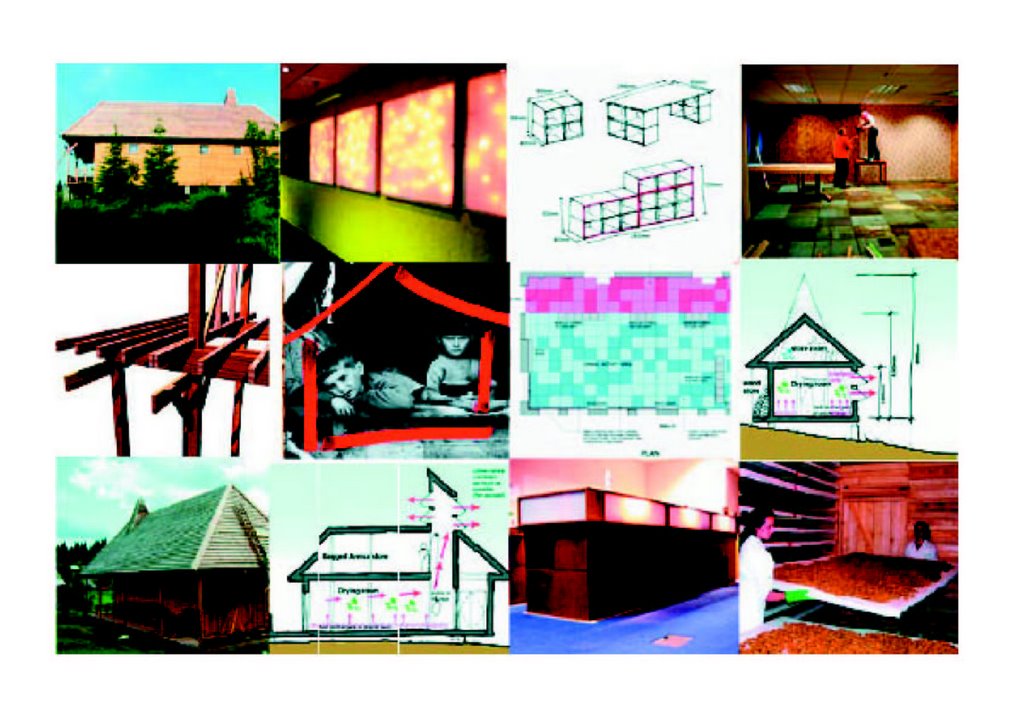
The meeting began with a presentation on a recent project in Romania headed by Chris Medland, for the World Wildlife Fund (from 9-5, he is an architect practising in London). The project involved community assistance in the drying and storing of Arnica flowers, grown only in certain parts of Europe and sensitive to pesticides, taking approximately 30 years to re-grow after being affected. Arnica is used in medicinal and cosmetic products, having widely acknowledged benefits to human health. Most of the interest in the flower has come from German companies and due to its temperament, is costly to obtain. With a seven-week deadline and none of the design team having ever visited Romania, this project not only involved the design of a building, but extensive research on the region and its climate and local materials.

Parts of Romania are extremely isolated from the city and many of its impoverished community use basic farming practises. The design of a hut for the drying or Arnica was made harder by the unreliable supply of electricity. Further, due to the requirements of German companies, the design team worked under strict parameters, meaning that only untreated wood could be used in the construction, giving the building a 40-year lifespan before needing to be recladded. The main idea was to Keep it Simple - this was no Guggenheim approach to design, but one which people on the ground could understand, build and use. The end result was a heating system which did not rely on electricity supply and internally, a series of shelves which would be moved in the drying process, with the air being regulated by a louvered chimney. The most important lessons coming out of the project was a design aimed to provide simple and practical solutions based on good knowledge of the local area, its climate, and construction methods.

AfH UK are preparing for the Crisis Open Christmas event this year. AfH are responsible for finding 6 temporary sites, and designing and constructing the interiors, to be used in the two weeks leading up to Christmas. All materials are donated by various manufacturing companies. Having myself volunteered last year in the temporary shelter within the London Arena before it was demolished, the project involves a considerable amount of dedication and passion. London's homeless population is set to increase with the influx of immigrants from newly joined members of the European Economic Area. I volunteered as a receptionist for the medical centre, and found that many homeless were in fact relatively well educated and well travelled; dispelling most of my assumptions of urban nomads. Many had multiple illnesses such as HIV, cancer, and arthritis combined, which they were willing to disclose to me in a very honest and open manner.

This year's shelters will be scattered throughout London and will give homeless people access to food, doctors, dentists, podiatrists, hairdressers, as well as providing training workshops on computer skills, art, meditation, yoga and general wellbeing, and most importantly, companionship. AfH's involvement in making last year's shelters happen was commendable. This year it is hoped to adopt a modular method of design and construction for hairdressers studios, doctors suites and the like, which can hopefully be reused on other projects.

This week's meeting comes after the launch of the new book 'Design Like You Give a Damn' published by the main branch of Architecture for Humanity, which highlights the many innovative architectural pro bono projects occurring throughout the world.

For more information please visit http://www.crisis.org.uk


Javiera Maturana

Architects for Peace UK