Architects for Peace news and articles

28.2.19

Materiales amigables con el medioambiente

Texto escrito por Rita Núñez. Publicado en Especial Soluciones Constructivas, Medios Regionales El Mercurio. Publicación en Architects for Peace cuenta con la autorización de sus autores.

Las características de los productos utilizados son importantes al momento de construir un edificio sustentable, por ello es importante la información transparente en torno a sus componentes, materias primas y procesos de extracción, manufactura y transporte.

Fuente: Soluciones Constructivas, Medios Regionales El Mercurio.
Cada vez más, es posible ver un interés mayor por incluir materiales con alguna característica de sustentabilidad. La transparencia en sus contenidos y materias primas, o bien, las características de su proceso de extracción y fabricación, tanto en el ámbito ambiental como social, son aspectos a los que se les está dando más importancia.

“Las características de los materiales son muy importantes al momento de querer hacer un edificio sustentable. Por ejemplo, su huella de carbono, medida desde el proceso de extracción de materias primas, su elaboración y su transporte a la obra, pesa tanto como el consumo energético en la operación del edificio”, comenta Gabriela Sabadini, ingeniera de Certificación Edificio Sustentable (CES). Asimismo, el especificar materiales como pinturas o alfombras con bajas emisiones mejora la calidad ambiental interior de un espacio, lo que se traduce en el bienestar de sus ocupantes.

11.12.16

El pillaje del patrimonio cultural Palestino

By Sergio Yahni  
(This article was first published in Sergio Yahni's blog in October 31, 2016 and has been republished with the permission of its author. Find an English version of this article here.)

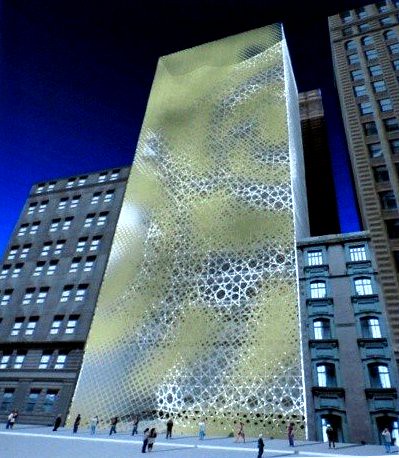
Maqueta del edificio del “Campus Nacional de Arqueología” que albergara las oficinas de la Autoridad de Antigüedades, almacenes que darán cabida a dos millones de artículos, laboratorios, una biblioteca y un magnífico espacios de exposición (fotografía: Israel Archeological Authority).
"The construction of Israel’s National Archaeology Campus (NAC), designed by architects Moshe Safdie and Irit Kohavi, has slowly but steadily progressed since 2012. NAC will sit next to the Israel Museum and Bible Lands Museum in central West Jerusalem, on what Israelis call “Museum Hill.” The $104 million building spans 35,000 square meters and stands nine floors tall. Inside will be the offices of Israel Antiquities Authorities, storage for two million artifacts, laboratories, a library, as well as exhibition spaces." Find an English version of this article here.

La construcción de un nuevo “Campus Nacional de Arqueología” diseñado por los arquitectos Irit Kohavi y Moshe Safdie todavía esta en curso y continuará por al menos otros 14 meses. La idea de construir este campus, que se encuentra en las cercanías del Museo de Israel y el Museo de la Biblia, surgió tras los Acuerdos de Oslo con el objetivo de transferir las colecciones del Museo Rockefeller de arqueología, situado en Jerusalén Oriental.

Se trata de un proyecto que no ha tenido un impacto internacional pero que claramente contradice convenios internacionales que tienen como objetivo prevenir el saqueo de la riqueza cultural de una región ocupada militarmente.

El museo Rockefeller de arqueología fue establecido durante el Mandato Británico de Palestina Contiene una gran colección de piezas arqueológicas desenterradas en las excavaciones llevadas a cabo entre los años 1920 y 1967.

Este museo se estableció como parte de una política británica de exponer en sus países de origen hallazgos arqueológicos que se consideraban parte del patrimonio nacional. Anteriormente esto hallazgos hubieran sido “exportados” a la metrópolis.

Esta idea ya se había llevado a la práctica en otras colonias del Imperio Británico donde se abrían centros dedicados a la actividad arqueológica que incluían oficinas para el Departamento de Antigüedades, salas de almacenamiento y un museo para exponer las piezas.

Interior del Museo Rockefeller en Jerusalén Oriental. El edificio
construido por por Austen Harrison fue iniciativa del Mandato Británico
de Palestina con el objetivo de crear un patrimonio nacional arqueológico
del país (fotografía: Wikipedia).
El museo adquirió su nombre cuando en 1925 John D. Rockefeller Jr. accedió a donar dos millones de dólares para el proyecto a pedido de James Henry Breasted, fundador y director del Instituto Oriental de la Universidad de Chicago.

Tras los acuerdos de cese de fuego jordano-israelíes de 1949 el museo Rockefeller paso a poder del Reino de Jordania. 39 años mas tarde, en Julio del 1988, cuando el gobierno jordano rescindió de sus demandas territoriales en Cisjordania este tendría que convertirse en parte del patrimonio cultural del Estado Palestino y por lo tanto estaría protegido por convenios internacionales de los cuales Israel es parte.

Como parte de un territorio ocupado esta riqueza cultural debería estar protegida por los Convenios de Ginebra, la Convención de La Haya para la Protección de los Bienes Culturales en caso de Conflicto Armado, por Convención sobre las Medidas que Deben Adoptarse para Prohibir e Impedir la Importación, la Exportación y la Transferencia de Propiedad Ilícitas de Bienes Culturales y otros convenios internacionales que tienen como objetive evitar el pillaje de bienes culturales durante conflictos armados o en situaciones de ocupación militar.

Pero tras la ocupación de la ciudad en 1967 y su anexión en 1980 Israel ignoro estas múltiples protecciones transfiriendo la administración del museo y sus colecciones a la Autoridad de Antigüedades de Israel transformándolo en una institución israelí mas.

La construcción del “Campus Nacional de Arqueología” Israel forma parte de un proceso de vaciamiento de los valores culturales de Jerusalén oriental que desde la ocupación fueron confiscados, clausurados, o que simplemente se dejaron decaer en desuso.

El nuevo predio en construcción sera un edificio de 35 mil metros cuadrados que se extenderá en nueve plantas y costada 400 Millones de dólares norteamericanos. Este edificio albergara las oficinas de la Autoridad de Antigüedades, almacenes que darán cabida a dos millones de artículos, laboratorios, una biblioteca y un magnífico espacios de exposición.

Hava Katz, doctora en arqueología y conservadora jefe de las exposiciones, ha dicho al periódico Haaretz que el cielo raso de la plaza de entrada tendrá un número de mosaicos bizantinos “que estaban en edificios o espacios públicos y parte de ellos serán expuestos por primera vez”. Uno de estos los mosaicos, que se encontraba en las bodegas del Museo Rockefeller cubría el cielo raso de en una capilla bizantina Beit She’an que fue excavada durante el Mandato Británico por el arqueólogo Michael Avi-Yonah. Katz cuenta que este mosaico trae imágenes de la vendimia, de animales de pastoreo y de caza. Dentro del edificio habrá un espacio de exposiciones con techo transparente.

Sin duda el nuevo “Campus Nacional de Arqueología” es un proyecto ambicioso pero no es seguro que pueda competir con una joya arquitectónica tal como es el edificio del Museo Rockfeller, que fue diseñado por Austen Harrison. Por otro lado, este proyecto, que no fue detectado por el radar de la UNESCO representa un peligro mas a las riquezas culturales palestinas y confirma la “necesidad urgente de llevar a cabo la misión de monitoreo reactivo” por parte de la institución internacional.

3.2.16

Paul Pholeros 1953-2016. A Legacy for Indigenous Housing through Community Empowerment

"It is hard to imagine how any individual can be at peace when their health is poor, their children are regularly sick and their general living environment miserable. To make any positive change in this cycle is difficult but essential." Paul Pholeros at Architects for Peace, 2008.

It is with great sadness that we inform our community of the death of distinguished architect and activist Paul Pholeros, who left us at the early age of 62. Paul was an expert and an activist for the right of quality housing for indigenous people in Australia. His participatory approach resonated not only at home but also in the rest of the world, where indigenous rights to achieve dignified housing and towns has not yet been achieved. It is not surprising then that his passing was announced by the national press and also, among others, by the Guardian in UK.
 

At Architects for Peace we were privileged to have Paul Pholeros twice generously share his knowledge, experience and dedication. He delivered presentations on the work of HealtHabitat in 2008 and 2012. In an AFP editorial, Eleanor Chapman described this work as “improving the housing of indigenous Australians living in marginalised remote communities, where existing houses often suffer from lack of funds for maintenance, overcrowding and poor fitness for purpose”.

Paul Pholeros will be immensely missed by the communities he worked with and by us.

More about Paul Pholeros’ work:


Anthony McInneny and Beatriz Maturana on behalf of Architects for Peace

28.2.15

La revancha de los cités: dos planes revivirán a estas históricas viviendas

This article was first published by El Definido on 24.02.2015 and republished here with the permission of its author Magdalena Araus, Chile.

Imagen: © Iván Theoduloz / Arquibus

Restauraciones, renovación y nuevas construcciones que los imitan son las maneras de revivir a los cités en Santiago. Estas primeras viviendas sociales cada vez son más valoradas, tienen muchos beneficios que ofrecer y no están dispuestas a morir.

24.12.14

Sustainable University Campus: neighbourhood and surroundings

The following article (in Spanish) describes the work undertaken by 2nd. year students of the Faculty of Architecture and Urbanism, University of Chile. The challenge was to situate an existing campus (in a transition to sustainability) and improve its presence within the city and with its citizens--how can a sustainable campus become a positive element in the urban fabric?
The proposals and details of the exploration can be found in the webpage developed by the students: http://claudiamirandam.wix.com/campus-sustentable


Escenarios sustentables para el campus Beauchef y la FAU

Source: escenarios sustentables campus Beauchef y FAU

12.6.13

La belleza como instrumento de identidad, complejidad y resilencia

Luciano Kulczewski García (Chile, 1896-1972) y la importancia de crear ambientes sustentables, en el ámbito social, económico y medio ambiental.


Vivienda social: one of many examples of social housing in Barrio Madrid, Santiago, Chile. Fuente propia.

18.1.13

Cities for Citizens: XVIII Biennial of Architecture and Territory

Santiago, Chile


"Cities for Citizens" was the evocative title of the XVIII Architecture biennial celebrated in Santiago, Chile last November.

In the opening speech, the curator, Sebastian Gray and the president of the Chilean Institute of Architects, Luis Eduardo Bresciani, stirred the discussion by pointing out to what is a rather shared complain across the globe, stating that:
"lack of architectural critique in Chilean media is perhaps a tangible demonstration of the feeble relationship between the architect and the public opinion. It seems less and less plausible for architects, urbanists and landscape architects--as professionals bodies or individuals--to be effective in influencing public policies, legislation and norms. Nor are they able to project in concurrence with the visions of progress and wellbeing emanating from participative processes, those that endow citizens with a sense of legitimacy and belonging.”
To see what was shown in the Biennial check here

Find Sebastian Gray's and Luis Eduardo Bresciani's opening speech here

Find a catalogue of projects here

21.12.12

Book: "La espacialidad del niño que no ve" (Spatiality of the child who doesn´t see)

Invitation to the launch of the book "Espacialidad del niño que no ve", Dic. 20, 2012. 
Tonight is the launch an important book written by two inspiring young and motivated architects, Mónica Díaz Vera y Constanza Mena Maino. The book entitled "Espacialidad del niño que no ve" (Spatiality of the child who doesn´t see) will be launched by Beatriz Maturana in representation of Architects for Peace.

This book poses some crucial questions, among them, one that makes us reconsider the location of the problem. It asks, "Then--, who is really disabled? The child that doesn´t see? o The city that is un-able to shelter them and offer spaces where people of all different physical, psychological, emotional and sensorial abilities can be welcome?

If you are in Santiago, we hope you can make it to the launch tonigh.
find more about this book: Plataforma Arquitectura

26.11.12

Post from Santiago Chile


Santiago Diary

22 November 2012

I’ve been in Santiago, Chile for a little under two weeks now and have not stopped. It is intoxicating.

Last night we went on the second of the bicycle rides organized in as many weeks by Bicipaseao Partrimoniales facebook.com/bicipaseospatrimoniales. We started at 8.00 pm and didn't bet home until after 1.00 pm. The tour visited four museums that were open to the public until midnight! At each we had a speaker and in between we cycled across Santiago through the lanes and streets, shutting down traffic wherever we crossed a road as there were about 150 of us on bikes - all ages, some kids, some dogs, some bicycles with little trailers with kids in them. The museums we visited were impressive not only for the architecture but the content and the formation of the institutions themselves.


24.11.12

Architectural design studio: designing for a purpose

Writes: Beatriz C. Maturana

The following article features a design studio (taller) at the University of Chile, Faculty of Architecture and Urbanism, led by Orlando Sepulveda (7th semester architecture students). 

The studio focuses on a significant and poorer district in Santiago, so significant in fact that one of its landmarks, Zanjón de la Aguada—a canal formally known for its industrial and organic waste pollution—had the unfortunate capacity to conjure inhospitable images of misery, crime and industrial decay, images that have negatively shaped the perception of that part of the city. Fortunately but slowly, these perceptions are fading away as something of the past. Most recently, the news that the Metro (Santiago´s underground) will open a station in heart of this district and the completion of the Parque La Aguada, part of the Bicentenary Projects (an extensive new flooding park running along the Zanjón de la Aguada canal), may put a definitive end to the stigma attached to the area and hopefully will positively impact on the entire city. A question arises as to how the improvements brought by these large urban interventions can be sustainable over time and ensure the best possible results for the district and for the enjoyment of the existing population.

Figure 1: proposal by María de la Luz Lobos, Mathilde Marcantoni and Gabriel Arias. 

26.9.12

Launched: Momentum - new Victorian architecture

The Office of the Victorian Government Architect launched its book Momentum: new Victorian architecture last month. There are a handful of mentions of Architects for Peace, along with a number of other Victorian-based organisations offering alternative ways to engage with architectural practice in an article inside 'Architectural ecology: speculations on emerging practices' by Anna Tweeddale. It's the closing piece - paving the way for the sequel perhaps??

9.1.12

A hospital with an attitude: the new Royal Children Hospital in Melbourne, Australia

I recently visited the new building for Royal Children Hospital in Melbourne, Australia which, as I hope these images capture, manages to successfully create a friendly and stimulating environment for children.

Hospital's main façade

30.11.11

Aga Khan Trust for Culture, Media and Publications

The Aga Khan Development Network (AKDN) has just released the Aga Khan Trust for Culture, Media and Publications. This is a comprehensive list of books, monographs and publications covering the topics of culture, architecture, cities, music and museums and exhibitions and reflecting the needs and aspirations of Muslim societies. Each topic is introduced with an explanatory note.

Image source: the Aga Khan Trust for Culture, Media and Publications. Click on image to access the publication.

25.6.11

Impromptu: a presentation by Mathias Klotz

Mathias Klotz discusses his projects, the role of nature and local knowledge in informing architectural form, the 8.8 Chilean earthquake and much, much more...

Casa 11 Mujeres, Cachagua, Chile. Source Abduzeedo.com
Early last year, Chilean architect Mathias Klotz accepted an impromptu invitation to an Architects for Peace forum. Klotz's direct and engaging presentation took place soon after the 8.8 earthquake that hit Chile on February 2010, which Klotz often referred to in his talk.

Mathias Klotz Germain was born on April 1965 in Viña del Mar (Chile). In 1991 he graduated as an architect from the Pontificia Universidad Católica de Chile. He has been awarded numerous awards and has major projects in Chile, Mexico, Italy, Lebanon, China, Uruguay, Argentina, Spain...
"I am interested in belonging to a place… That is what my work is about…
I have no idea if I have found a place, but I think there are some projects that do have one.
The Reutter House has one by climbing up the trees. The Las Niñas Winery has one by illuminating the industrial space with natural light. The Mulchnick House has one by constructing an inhabitable terrace. The Ponce House has one on the River Plate." (Source: Mathias Klotz website)

Among his awards:
2011 Distinction, Modular Building Institute (Restaurant Rucary)
2010 Green Good Design, Casa La Roca;
2002 Second Place, Miami Biennial Miami (Colegio Altamira)
2002 Third Place, Miami Biennial Miami (Casa Reutter)
2001 Borromini Award, Catgory Architect under 40 y.o., Roma
2000 Finalist, Mies van der Rohe Award, Casa Reutter
1998 Finalist, Mies van der Rohe Award, Casa Müller


We invite you to watch this presentation captured in the following three videos.


Impromptu: Mathias Klotz (Chile) Part 1 from Architects for Peace on Vimeo.


Impromptu: Mathias Klotz (Chile) Part 2 from Architects for Peace on Vimeo.


Impromptu: Mathias Klotz (Chile) Part 3 from Architects for Peace on Vimeo.

Find more about Mathias Klotz' work at: http://www.mathiasklotz.com/

25.4.11

Pritzker Prize 2011 to Eduardo Souto de Moura: acknowledging local context

By Beatriz C. Maturana

According to the words of the Pritzker Prize jury, in the 80’s and at the height of post-modernism, Souto de Moura buildings were “intensely out of fashion”.[1] Souto de Moura deliberately did not give in to the pressure to conform to architectural fashion or fads. Working with and within his own architectural national context has provided Souto de Moura with an abundance of meaningful references to build upon. The jury referred to Souto de Moura’s architectural work in terms of the “echoes of architectural traditions”, “mindful of its context” that reinforces history while, “expanding the range of contemporary expression”.[1] His most challenging, innovative and unconventional trait is that Souto de Moura’s architecture is bravely local.

Braga Municipal Stadium. Photograph by Luís Ferreira Alves. Image source: The Pritzker Architecture Prize. © The Hyatt Foundation

18.10.10

Gardens Beneath Which Rivers Flow

The Central outdoor space and
the upper level Fountain
Water in the Muslim Constructed Landscape

Ashraf M. Salama, 2010

This article was first published in: Faith & Form, Volume 43, Issue 3, 2010, PP.30-36. An article in a theme issue of Faith and Form: Sacred Landscape.

The Muslim faith emerged in a desert culture that thirsted for water, which was praised and prized as a rare yet breathtaking phenomenon. The faith spread across lands where great civilizations had already prospered: in the fertile valleys of the Nile in Egypt, of the Tigris and Euphrates in Iraq, and eventually of the Indus in India and of southern Spain. Water played multiple roles in relating the holy Qur’an and the sayings of the Prophet Muhammad to Muslim culture, from being a landscape element in mosques, mausoleums and palaces, to its use for irrigation and for everyday living. This article highlights selected manifestations of the use of water as one of the important elements that shaped the built environment of Muslims.

Gardens Beneath Which Rivers Flow: Water in the Muslim Constructed Landscape

30.8.10

On Proposed Manhattan Mosque and Islamic Community Center

By Orhan Ayyüce
Article originally published for this discussion thread in Archnect.com and re-published here with the author's permission.


I am not a practicing Muslim. Perhaps, then, not a muslim at all. Growing up in a secular but, nevertheless, un-officially and majority muslim country, I have been exposed to Islam, learned about its traditions, customs, and, as an architect, developed great appreciation for the design of its places of worship.

26.8.10

Nyanza Hospital: appreciative inquiry design in Africa

Following Dr. Ashraf Salama’s last editorial on Appreciative Inquiry and its impact on environment and performance, I wondered about the outcome of this approach if applied in developing countries instead of industrialized ones –all cases cited in Dr. Salama’s editorial occur in the US, where people are more exposed to participatory systems. How different is it in other less participatory or developed parts of the world?

1.7.10

CABE downunder

CABE Downunder is a Melbourne-based organisation seeking to emulate the UK Commission for Architecture and the Built Environment, but in a low key, working on the smell of coffee sort of way.

Carrying on from a series of small meetings held in Melbourne since the mid 1980s, CABE Downunder (a working title) is now determining just what sort of group it will be in the future.

Founding member, architect Bill Chandler says, "There’s been lively debate about [our] form or status, whether it should be a commission for cities or more of a stimulus group... The initiative is quite inclusive, compared to more territorial organisations that only focus on one particular area. We’re looking at the socio-economic dimensions as well as the physical – the practice of good architecture."

To join the discussion, attend the next meeting at Melbourne Town Hall on July 13th.

5th Estate
Urban Design Forum (with contact details)

21.6.10

‘If you want to fuck with the falcons, you’d better learn how to fly’

By: Rory Hyde

This article was first published on Archis' Action! Blog

A brief roundup of ‘extra/ordinary’, the Australian Institute of Architects national conference, Sydney, April 2010

Although delivered simply as an amusing anecdote, when taken out of context, this crude piece of wisdom from the elder statesman Peter Corrigan seemed to capture the essence of ‘extra/ordinary’. This was a conference about engaged practitioners; engaged in the ‘ordinary’ messy reality while still managing to scratch out something ‘extra’. Architects presented innovative (and often idealistic) approaches to complex problems, while not afraid to go beyond the discipline to engage with the pragmatics of financing, policy or public engagement in order to see them executed.

Creative director Mel Dodd’s vision for the conference included the words ‘contingency’, ‘compromise’, ‘complexity’, ‘concession’, ‘collaboration’ and ‘constraint’ – a clear endorsement for tentative conclusions and grappling with the real as opposed to the confident presentations of crisp and complete buildings by architectural stars as we have seen at past conferences. This is at once a reflection of our ‘no frills’ economic times – an end to the age of excess – but also a statement of urgency for the profession. If we continue to hitch our future on offering rarefied aesthetics instead of participation in the complex mechanisms of the city, our days are surely numbered.